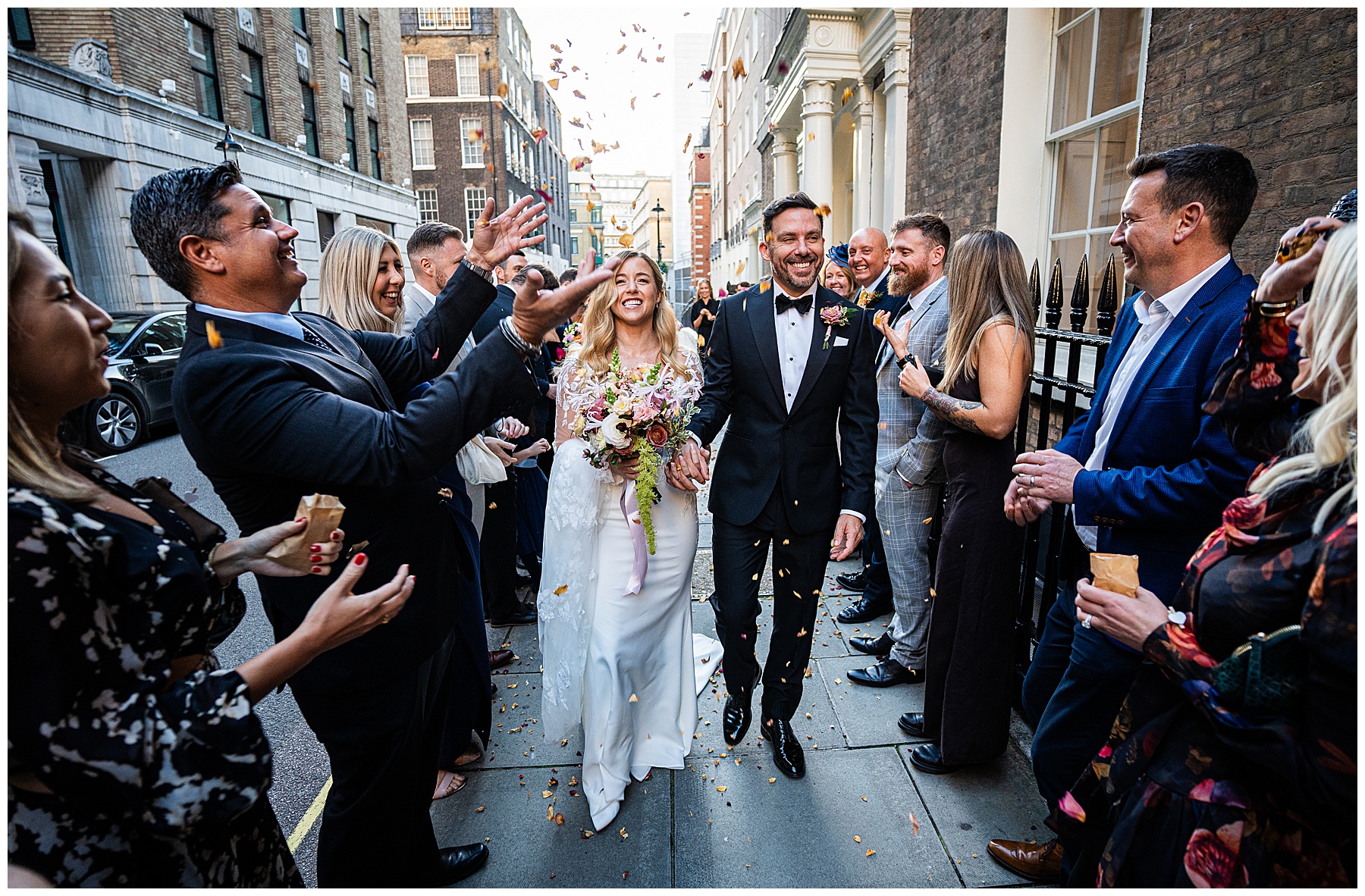

If you wince at the thought of a camera pointed at you, you are in good company, and your wedding photos can still be some of the best pictures ever taken of you. The fix is rarely “learn to pose”. It is choosing a photographer whose style does not rely on posing, meeting them before the day, giving them the right information, and spending your day looking at each other rather than the lens.
Below is a practical guide from a documentary wedding photographer in Kent: what to do months ahead, what to do on the morning, how to tell your photographer what you need, and which styles of coverage suit nervous couples best.
TL;DR
- Being camera shy is normal. Choose documentary (reportage) coverage, where the photographer watches and you get on with your day.
- Meet your photographer first, and consider an engagement session as a low-pressure rehearsal.
- Tell your photographer exactly what you dislike, and agree a short list of must-have group shots so nothing feels like a surprise.
- On the day, talk to each other, keep a drink and a job in your hands, and let the photographer come to you.
- Judge your photos in context. First reactions to your own face are often harsher than your later ones.
Table of Contents
- Why so many people dread being photographed
- Choose a style that does not need you to perform
- Before the wedding: how to lower the nerves
- What to tell your photographer
- On the day: staying relaxed and looking natural
- Less posed approaches that suit nervous couples
- Choosing a photographer when you are camera shy
- Seeing your photos afterwards
- Working with us
- FAQ
- Sources
Why so many people dread being photographed
Most of us only see ourselves in a mirror, which shows the reversed version we are used to. A photo shows the face other people see, and it can feel slightly off. Add an audience, a lens and a day that matters enormously, and self-consciousness is almost guaranteed.
It is also common to be critical of the finished pictures. Newsweek reported that an Australian bride, Jordyn Manning, initially liked only 20 to 30 of around 1,000 wedding photographs and said it took her over a year to view them with kinder eyes. Her story is one person’s, not a statistic, but it will sound familiar to plenty of couples: the worry about looking “wrong” can follow you well past the day itself.
The useful point is that this feeling is mostly about being watched and judged, not about how you look. So the best plan reduces the feeling of being watched. That is a question of approach, not of cheekbones.
Choose a style that does not need you to perform
The biggest single decision for a camera-shy couple is the style of photography, because it decides how much of your day is spent “doing photos”.
| Style | What you do | Fit for camera-shy couples |
|---|---|---|
| Traditional / posed | Stand where you are told, hold positions, repeat for each group | Hardest if you dislike attention |
| Mixed | A block of posed portraits plus candid coverage | Fine if the posed part is short and well explained |
| Documentary / reportage | Carry on with your day while the photographer observes | The easiest, because there is little to perform |
Documentary coverage means the photographer works from the edges, anticipating moments rather than arranging them. If you want the full picture of how that works, our guide to what a documentary wedding photographer actually does is a good place to start, and different wedding photography styles compares the options side by side.
Candid does not mean you will never be aware of the photographer. It means you are rarely asked to do anything other than be yourselves. Our page on candid wedding photography and real moments shows what that looks like in practice.
Before the wedding: how to lower the nerves
Meet your photographer properly
Trust is the foundation. You will not relax around someone you have only emailed. Book a call or meeting before you pay a deposit, and pay attention to how you feel in the conversation. Do they listen when you say you hate being photographed, or do they brush it off with “don’t worry, everyone says that”?
Look at full galleries, not just a highlight reel. A full wedding gallery shows how a photographer handles awkward, quiet and emotional moments across a whole day, which is exactly what you are worried about. We have written about why seeing galleries first matters for unobtrusive wedding photography, and about how to get comfortable and communicate with your wedding photographer.
Consider an engagement session as a rehearsal
An engagement shoot is not a test you can fail. It is an hour or so of walking, chatting and being photographed somewhere you like, with no dress, no guests and no schedule. You learn how the photographer works, how your own face behaves on camera, and what you do with your hands. Most importantly, you see the results and realise you look like yourselves.
To keep it low pressure:
- Pick a place that means something, such as the pub where you had your first date, a favourite walk or your own kitchen.
- Wear what you would normally wear on a nice day out, not an outfit you have never worn.
- Keep it short. Forty-five minutes of relaxed coverage beats two hours of effort.
- Go without an agenda, and tell your photographer which pictures you hate before you start.
- Do not look at the back of the camera after every frame. Ask to see the gallery afterwards.
We offer engagement shoots as an additional session alongside wedding coverage, and plenty of nervous couples find the wedding day far easier afterwards, simply because the photographer is no longer a stranger.
Practise being photographed in small doses
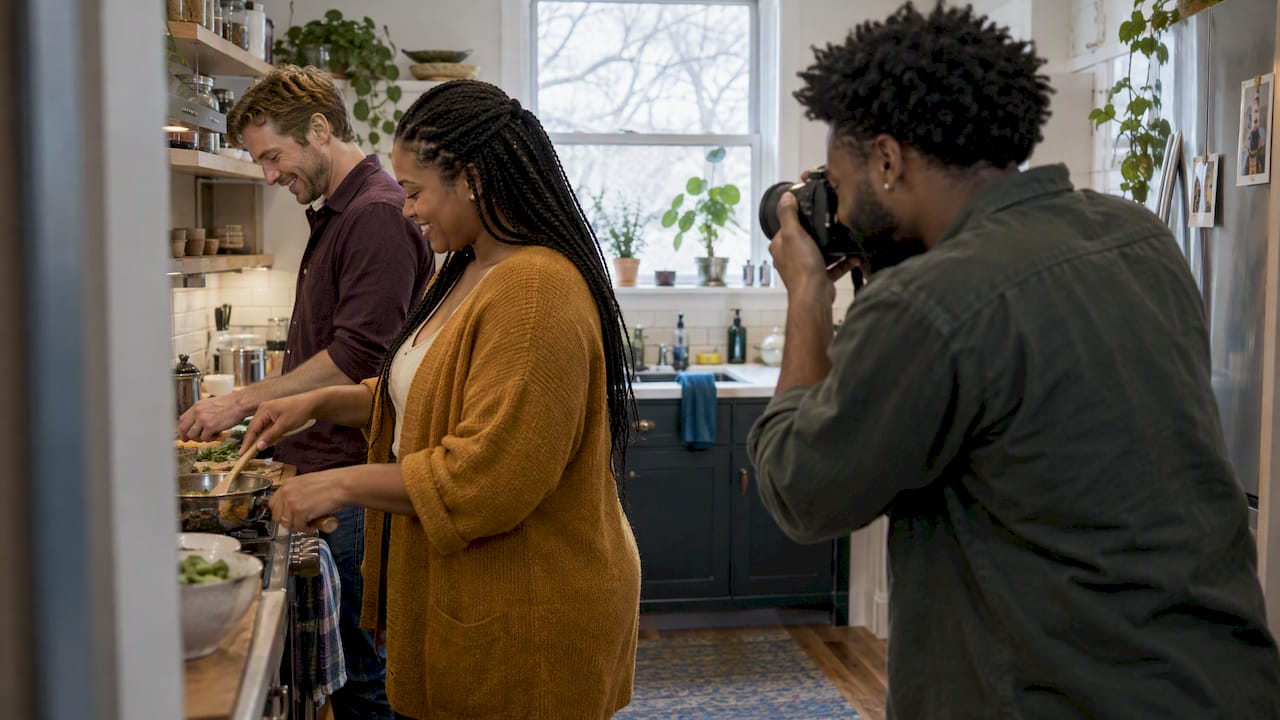
If even the idea of the engagement shoot feels like a lot, start smaller. Ask a friend to take a few casual pictures of you both while you cook, walk the dog or sit in the garden. Look at them together. You will probably find that the pictures you like most are the ones where you were not thinking about the camera. That is the whole principle of reportage, and it is useful evidence for you.
Sort the timeline so you are not rushed
Stress shows on faces. A tight morning with hair and make-up running late creates tension that no photographer can edit out. Build in buffers, particularly around getting ready and the time between ceremony and drinks. Our post on what to do after you get engaged covers the early planning steps that make a calmer day possible.
What to tell your photographer
Vague worry is hard to act on. Specific information is easy. Before the day, send your photographer a short, honest note covering:
- What you dislike. A side of your face, your smile in photos, being asked to kiss on demand, having a camera pushed in your face while you get dressed. Say it plainly.
- What you love. Dancing, your dog, your nan laughing, a quiet moment with your best friend. These tell the photographer where to point the camera.
- Who is nervous. If one of you is fine and the other is not, the photographer can adjust how they work with each of you.
- Family dynamics. Tension between relatives, someone who hates being photographed, or a guest who needs to be seated carefully.
- Your must-have group shots. Keep the list short and named, so the formal part is over in minutes and nobody is hunting for relatives.
- Any physical or emotional needs. Anxiety, a stammer, mobility or anything else that affects how you want to be photographed.
This is what a pre-wedding consultation is for. A good photographer will turn your answers into a plan: where to stand, when to step back, and when to leave you completely alone.
On the day: staying relaxed and looking natural
Look at each other, not the lens
The simplest way to forget the camera is to give your attention to your partner. Talk, whisper something silly, adjust their collar, tell them how you are feeling. Expressions that come from a real exchange look nothing like expressions you put on for a lens. If you are asked to walk, walk slowly and talk about something unrelated: what you want to eat, who just arrived, what your uncle is wearing.
Give your hands something to do
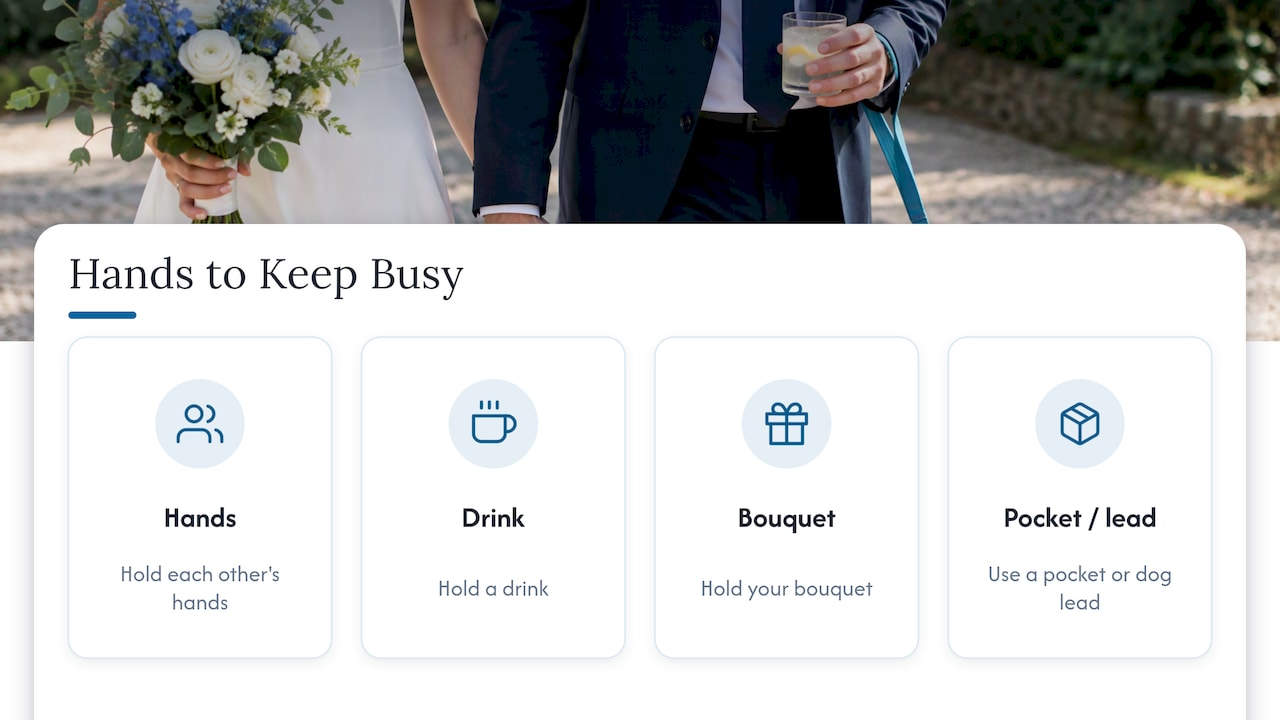
Awkward hands are the most common complaint from nervous couples. Hold each other’s hands, a drink, your bouquet, a pocket, a dog lead. The aim is not choreography, only to stop you thinking about where your arms are.
Do not hold a smile
A smile held for several seconds looks stiff. If you are asked to pause, take a breath, look at your partner and let a smile come. If you feel you are going to laugh, laugh. Laughing at how ridiculous you feel is often the best picture of the afternoon.
Use a drink, and some breathing space
A drink with the wedding party can take the edge off, although there is no need to overdo it, and being tipsy rarely helps photographs. A few slow breaths before the ceremony and before portraits helps more than most people expect. If your nerves are more than ordinary wedding-day jitters and regularly affect your daily life, talk to your GP about support well ahead of the wedding rather than hoping the day will fix it.
Keep the portrait time short and spread out
Nervous couples do better with ten minutes here and there than one long session. Short breaks during the day, in a quiet corner or a walk around the grounds, give you a rest from guests and a chance to be a couple. A photographer who works quietly will often pick up the best frames on the way there and back, not during the “official” bit.
Let the crowd work in your favour
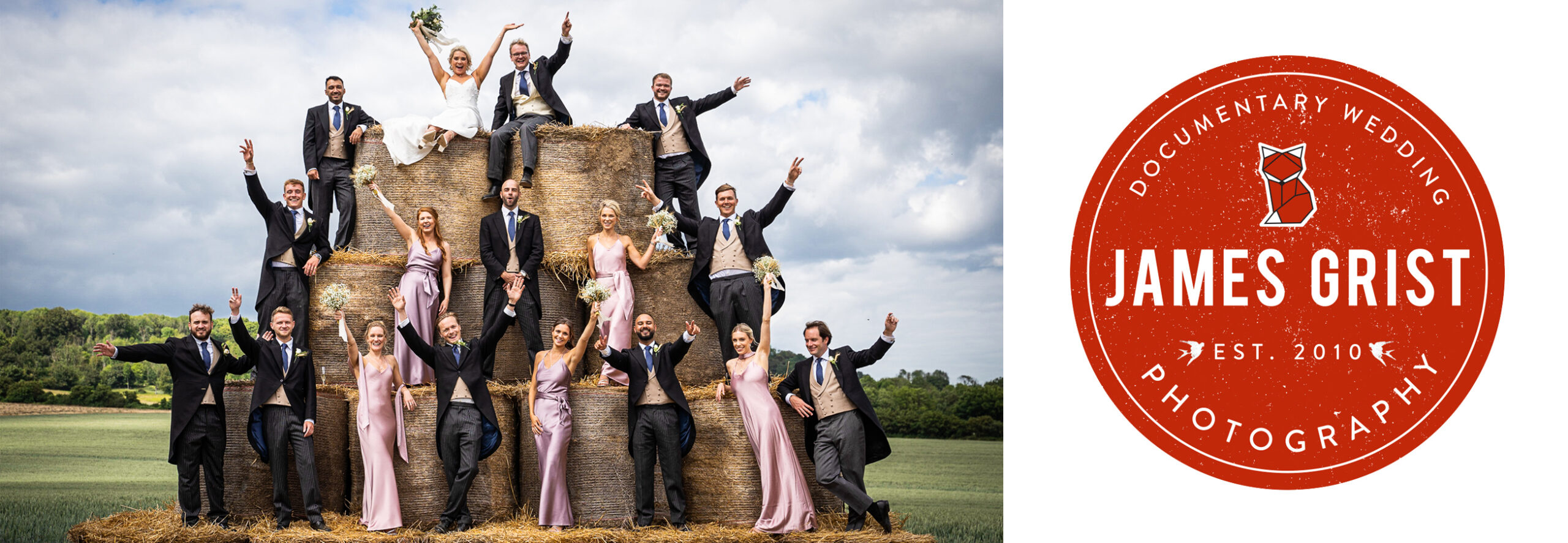
Guests can feel like an audience, but they are also your best distraction. When you are chatting, hugging, toasting and dancing, nobody is looking at the camera and the photographer is simply recording it. The photos that camera-shy couples tend to love are from the ceremony, speeches and dance floor, because they are too busy to pose.
Less posed approaches that suit nervous couples
- Reportage coverage from the start. The photographer follows the day as it unfolds, from preparations through to the party.
- Distance and long lenses. Shooting from further away lets you be in the moment without a lens close to your face. Many nervous couples find this the biggest relief.
- Back-of-head and detail shots. Walking away from the camera, holding hands, or being photographed from behind can give you beautiful images without direct eye contact.
- Prompts rather than poses. “Tell your partner the worst thing about today so far” gets a better result than “look into each other’s eyes”.
- A short, honest family list. Keeping group photographs to a handful keeps your energy for the rest of the day.
- A second photographer. With two photographers covering different places, you do not feel followed, and more moments are captured without anyone having to repeat things for the camera.
You will see this kind of coverage at real weddings. Look at Maia and Elliot’s wedding at Ellenborough Park or Lauren and Jordan’s day at Solton Manor to see how the quiet moments and the chaos sit together.
Our perspective
I have photographed a lot of couples who tell me in the first five minutes that they hate having their picture taken. It is one of the most common things I hear, and I take it as a brief rather than a problem.
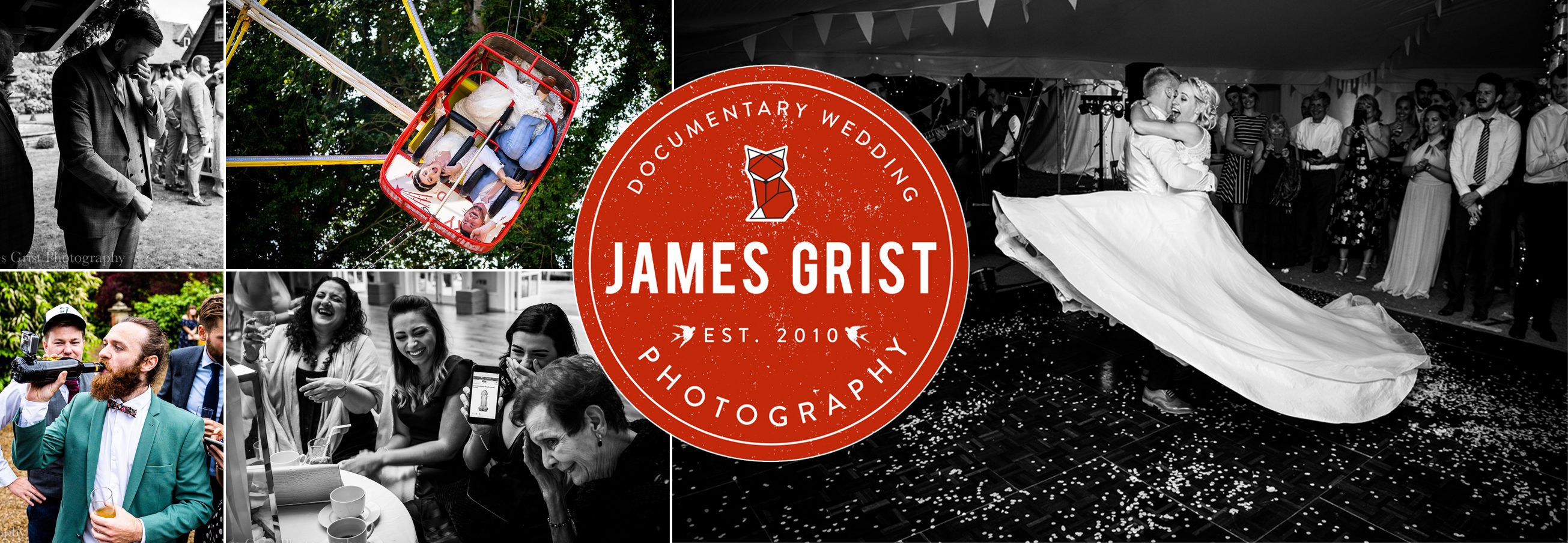
We built our approach around not needing you to perform. We work ninja-style, which means staying out of your way, watching for the glance, the giggle and the happy tear, and only stepping in when it genuinely helps. We care more about connection than perfection, and that suits nervous couples because there is no pressure to get it right.
The couples who surprise themselves most are the ones who stop thinking about the photographer by lunchtime. Once the day takes over, people forget us, and that is when the best pictures happen.
If you are nervous, tell us early. We would much rather hear it at the first conversation than discover it on the day, and we can plan the whole day around how you want to feel.
James
Choosing a photographer when you are camera shy
Use these questions at the consultation stage:
- How do you work with couples who do not like being photographed?
- How much of the day will be posed and how much observed?
- Can I see a full gallery from a wedding with a nervous couple?
- How do you handle family group photographs?
- Do you offer an engagement session, and what does it involve?
- What happens if one of us is having a bad moment on the day?
Listen for calm, specific answers. A photographer who explains their process will make you feel safer than one who insists “I will make you look amazing”.
If you are in the south east, our guides to Kent wedding photography and documentary wedding photography in London explain how we work in each area.
Seeing your photos afterwards
When the gallery arrives, look at it with your partner, with a drink, and not in a rush. Your first reaction may be to zoom in on your own face. Try to look at the whole picture instead: who is in the frame, what is happening, how the room feels. Our experience is that most couples quickly stop noticing the things they feared and start noticing the people they love.
If you find it hard, leave the gallery for a few days and come back. As the Newsweek story above suggests, your view of the pictures can soften over time, and the photographs will be there when it does.
Working with us
We are documentary wedding photographers covering Kent, London and destination weddings, and a relaxed, unobtrusive style is the heart of what we do. Our published 2026 packages are Package 1 at £1,650 and Package 2 at £1,950, and Double Coverage is available from £400 if you want a second photographer to capture more without following you around. See the packages and prices page for what each one includes.

If you are nervous about being photographed, start with a conversation. Tell us what worries you, and we will tell you honestly how we would approach your day. You can reach us through the Jamesgristphotography homepage.
FAQ
Is it common to not like your wedding photos?
Yes, it is common to be self-critical about your own appearance, especially in the first few viewings. One widely shared account reported a bride liking only a small fraction of her pictures at first and warming to them over a year later. Looking at the photographs with your partner and focusing on the moments, not your face, usually helps.
How do I get over camera anxiety before my wedding?
Get used to the photographer before the day with a consultation and, ideally, an engagement session. Tell them what worries you, and practise being photographed casually with a friend. If anxiety is affecting your everyday life, speak to your GP.
Do I need to pose at all if I choose documentary photography?
Very little. Documentary coverage is based on observing your day as it happens. You may be asked for a short set of portraits and a few family groups, but these can be kept brief and agreed beforehand.
Should I book an engagement shoot if I hate being photographed?
It is often the best thing you can do. It lets you meet your photographer, see how you look when relaxed, and rehearse in a setting with no pressure. Keep it short and choose somewhere familiar.