
Natural light gives you the softest, most authentic wedding photos, but only if you plan your day around it. The single most important step is booking time and choosing locations that hand your photographer good ambient light to work with, rather than leaving it to chance.
- Golden hour, open shade, and window light all flatter skin tone and colour far more reliably than flash.
- Talk to your photographer early about your ceremony time and venue layout, not just your dress and flowers.
- A skilled natural light photographer still carries a flash or LED, and uses it only when the room genuinely demands it.
Key Takeaways
Natural light wedding photography delivers softer, more authentic results than flash, but only when couples plan their timeline and venue choices around where the light actually falls.
| Point | Details |
|---|---|
| Golden hour timing | Schedule ceremony or portraits roughly an hour before sunset and confirm exact timing against the venue’s own geography. |
| Reflectors over flash | Reflectors and diffusers shape existing sunlight for shadow control without adding an artificial source. |
| Flash has a place | Low-power bounced fill or LED handles genuinely dark rooms; direct flash is a deliberate stylistic choice for parties. |
| Verify with full galleries | Ask to see a complete wedding gallery, not hero shots, to judge how a photographer handles evening light. |
| Book a natural-light specialist | Jamesgristphotography offers documentary, natural-light-first coverage across Kent, London, and destination weddings. |
Table of Contents
- Why couples choose natural light wedding photography
- Timing your day around the light
- The photographer’s toolbox for shooting in natural light
- Does natural light photography mean no flash at all?
- What to ask before booking a natural light photographer
- Reflectors and diffusers without going near a flash
- Editing natural light photos without losing the truth of the moment
- The real limitations of natural light, and how they’re handled
- Sources
Why couples choose natural light wedding photography
Ambient light photographs skin tones honestly and keeps the mood of a moment intact, which is why so many couples now ask for it by name. Natural light photography uses whatever the room or sky is already giving you instead of firing a flash over it, and the result reads as soft, indirect, and unmistakably real rather than lit for a camera.
Venue features do a lot of the work here. A wall of west-facing windows, a marquee lined with fairy lights, candlelit long tables at dusk, all of these become part of the photograph rather than a backdrop the flash flattens out.
- Skin tones look warmer and more natural without the harsh falloff flash creates.
- True colours in a bouquet, a bridesmaid’s dress, or a venue’s brickwork hold up rather than washing out.
- Candid moments feel unstaged because nobody is reacting to a flash going off in their face.
The trade-off is real, and worth knowing before your wedding day rather than after. Low light means more grain in some shots, and evening images naturally lean moodier and darker than a flash-lit reception would. Couples who choose natural light are choosing atmosphere over uniform brightness, and most find that trade entirely worth it once they see the gallery.

Timing your day around the light
Golden hour, the hour or so before sunset, produces the warm, soft light every photographer chases for romantic portraits. Blue hour, the short window just after sunset, gives a cooler, cinematic look that suits skyline or waterside venues. Both windows are short, and both move depending on where you are standing.
Venue geography changes everything. Trees, hills, and nearby buildings can steal your golden hour twenty minutes early, or push it later than the sunset time an app tells you, which is exactly why scouting the venue for light matters more than checking a generic sunset calculator.
- Ask your photographer to visit or research your venue’s aspect before the day, not on the morning of.
- Schedule your ceremony or couple portraits roughly an hour before sunset, leaving a genuine window for golden hour images.
- Allocate some time purely for portraits, separate from family photos or guest mingling.
- Use a sun position app to check where the light falls at your actual ceremony time, not just sunset.
Pro Tip: If your ceremony has to happen midday, ask your photographer to plan a short “golden hour escape” later in the evening, even ten minutes away from the reception, purely for the two of you.
A well-planned wedding photo timeline protects this window from being swallowed by speeches running long or a delayed first dance.
The photographer’s toolbox for shooting in natural light
Working without flash means the camera settings do more of the job, and the choices are less mysterious than they sound. Most natural light documentary photographers shoot on fast prime lenses, often in the f/1.4 to f/2.8 range, because a wide aperture lets far more light hit the sensor without needing a flash to compensate.
- Wide apertures let photographers shoot handheld indoors or after sunset without flash.
- Shutter speed generally stays fast enough to freeze movement to avoid motion blur for anything with motion.
- ISO climbs as the light drops, and a competent photographer treats some grain as part of the mood rather than a mistake to hide.
The in-field rule most documentary photographers follow is simple: use the widest aperture the lens and focus system will allow, keep shutter speed high enough to avoid blur, and accept grain over reaching for flash during an emotional moment. Pushing ISO thoughtfully, rather than fearing it, is what keeps a first kiss or a father’s speech looking like it happened rather than like it was lit for one.
Direction matters as much as quantity. Backlighting a couple against a low sun creates the glowing rim-light look many couples request by name; positioning that same sun slightly behind and to the side often produces a cleaner silhouette for reception exits or first-look reveals.
- Ask for a few backlit portraits during golden hour, they photograph beautifully and need almost no direction.
- Request natural movement, walking, laughing, a spin, rather than static posing.
- Let hands do something (holding a drink, adjusting a jacket) so the pose reads as candid rather than held.
Pro Tip: Ask your photographer to shoot a few frames with the sun directly behind you both. It is one of the simplest ways to get that warm, glowing portrait everyone pins on their mood board.
Does natural light photography mean no flash at all?
No, and any photographer who tells you otherwise is being precious rather than practical. Most experienced natural light wedding photographers still carry a flash or LED light for genuinely dark rooms, safety, or a specific shot a couple has requested, but they lean on ambient light for the vast majority of the day.
- Bounced flash off a ceiling or wall for reception dancing, keeping light soft rather than direct.
- Low-power fill flash mixed with ambient light in a dim marquee, so the room’s own atmosphere still reads.
- Off-camera positioning during speeches or the cake cutting, when a huge dark hall genuinely needs help.
There is also a deliberate style choice worth knowing about. Direct, on-camera flash has become a fashionable look for party and dance-floor portraits, giving a crisp, punchy, editorial feel that is entirely different from a bounced emergency fill. If you love that look for your evening reception, say so at your consult, because it is a stylistic request rather than a technical necessity.
What to ask before booking a natural light photographer
A polished highlight reel tells you very little about how someone handles a dim marquee at 9pm. Checking full-day galleries rather than hero shots is the single best way to judge whether a photographer’s skill holds up once the sun goes down.
- Ask to see one full wedding gallery from ceremony to last dance, not a curated highlights set.
- Ask specifically for venue-style examples similar to yours, church, barn, marquee, or country house.
- Ask what their flash policy actually is, and when they would reach for it.
- Ask how they edit for consistency across bright outdoor shots and dim evening ones.
- Red flag: no evening or reception photos anywhere in their portfolio.
- Red flag: vague or defensive answers about low light handling.
- Red flag: every gallery image looks identical in tone, suggesting heavy editing rather than genuine light management on the day.
Real galleries settle this faster than any answer at a consult ever could, which is exactly why seeing full days matters more than seeing favourites.
Real weddings, real light
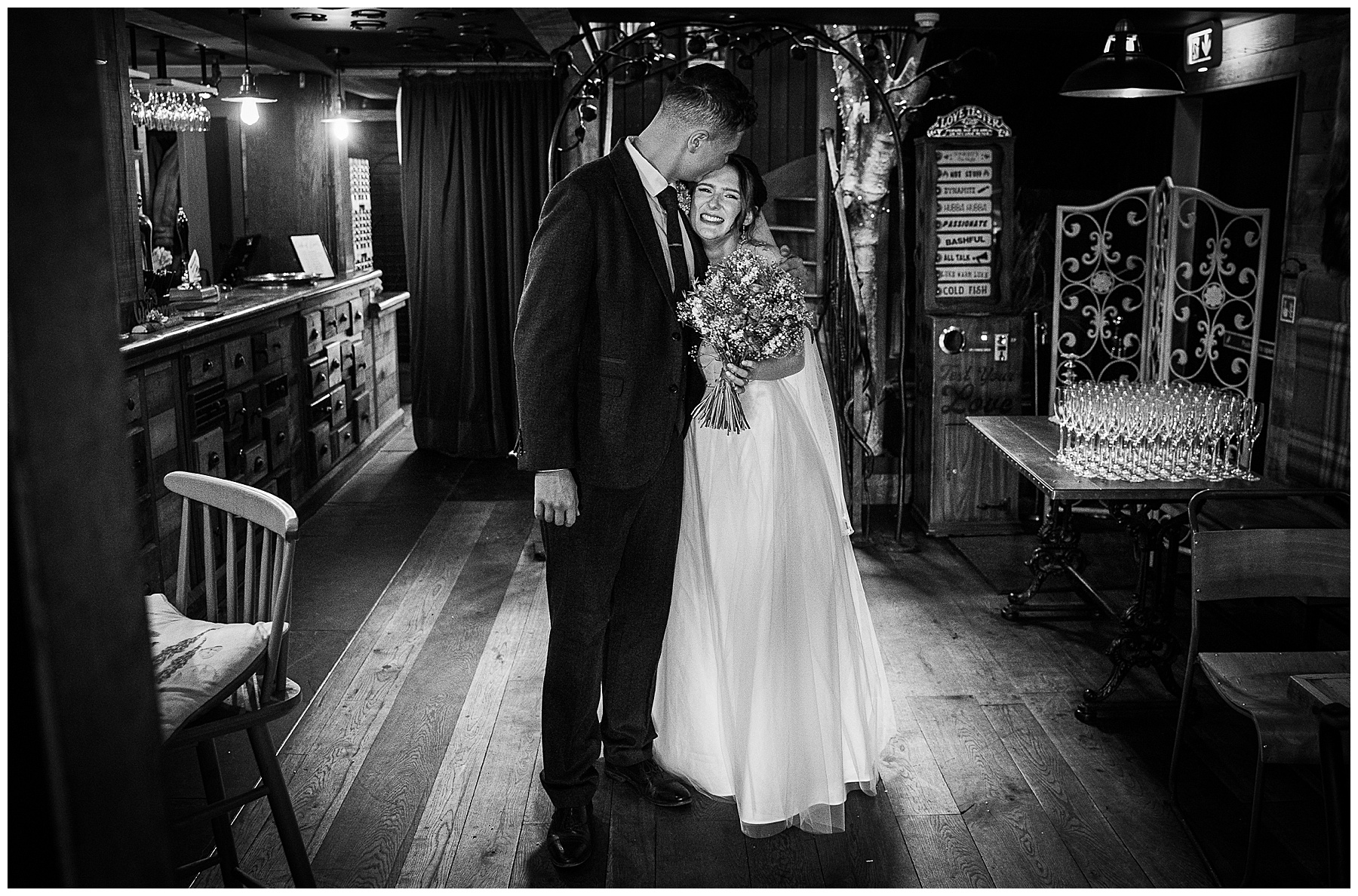
- A wedding at Pelham House used the venue’s tall windows for soft indoor portraits before moving outdoors for a golden hour couple session.
- John and Bryony’s farm wedding needed wide apertures and subtle fill in a dim barn once the sun dropped.
- Hannah and Russell’s sunflower field wedding leaned entirely on backlit, golden hour portraits among the flowers.
Editing natural light photos without losing the truth of the moment
The best edit on a natural light wedding photograph is the one nobody notices. Post-processing should recover detail and correct minor colour shifts, not repaint the mood the ambient light already created on the day.
A few habits separate authentic editing from over-processing:
- Correcting white balance to match how the scene actually felt, rather than pushing every image toward a single trendy filter.
- Recovering shadow detail in underexposed evening shots without flattening the contrast that gave them atmosphere.
- Keeping skin tones true rather than smoothing or lightening them to a uniform, unnatural finish.
- Matching tone consistently across a gallery so a sunlit ceremony and a candlelit speech still feel like the same day.
Grain from a high ISO evening shot is not something to erase at all costs. Many photographers leave a touch of it in place deliberately, because stripping it out with heavy noise reduction often smudges detail and gives portraits a slightly plastic look. The honest approach treats editing as a finishing pass on light that was already good, not a rescue mission for light that wasn’t.

The real limitations of natural light, and how they’re handled
Natural light is not without its problems, and any photographer who pretends otherwise is not being straight with you. The most common challenges are entirely predictable, which is exactly why they are manageable.
Overcast days remove the golden hour glow entirely, but flat, diffused cloud cover is actually one of the kindest lighting conditions for portraits, since shadows soften and skin tones even out without any harsh contrast to manage. Bright, direct sun at midday causes the opposite problem: hard shadows under eyes and noses, which photographers manage by moving couples into open shade under a tree or awning rather than fighting the sun head-on.
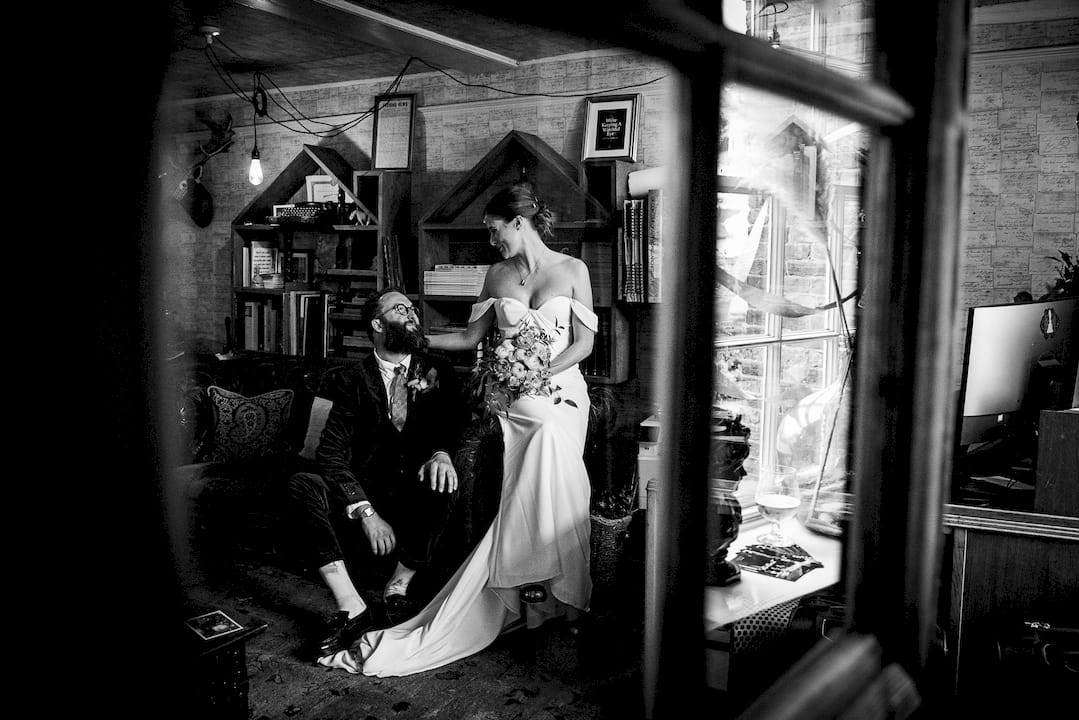
Indoor ceremonies in old churches or dim barns are the trickiest scenario, since window light alone often isn’t enough once the ISO climbs past what a lens can comfortably handle. This is precisely the situation where a low-power fill flash or an off-camera LED earns its place, used sparingly enough that the room’s own atmosphere still comes through in the final image.
Fast-moving moments, a first dance spin, confetti thrown mid-stride, need shutter speeds quick enough to freeze motion, which pushes ISO higher still in a dim marquee. The mitigation is less about equipment and more about positioning: standing where window light or open doors give the most usable light, and timing key shots for the brightest available moment rather than forcing them into the darkest corner of the room.
Why the “no flash, ever” purism misses the point
Couples sometimes assume a natural light photographer is one who refuses flash on principle, but that framing gets it backwards. The actual skill is knowing when ambient light is enough and when it genuinely isn’t, then reaching for a flash only in that second case, quietly, and without changing the tone of the picture. Photographers who chase that reputation for purity often end up with unusable, murky shots from a dark reception rather than admitting the room needed a little help. Good natural light work isn’t about refusing tools, it’s about restraint: using the light that’s there whenever possible, and stepping in with a low, bounced fill only when the alternative is a photo nobody will want to print.
How to book natural light documentary wedding photography with James Grist
Jamesgristphotography gives you a documentary, natural-light-first approach across Kent, London, and destination weddings, without the posed, flash-lit look many traditional packages default to.

Every booking includes a pre-wedding consultation where light, timeline, and venue layout get discussed properly rather than glossed over, day-of coverage that stays unobtrusive rather than directing your guests around a lighting rig, and a full gallery afterwards so you see the whole story, not just the highlights. If you want a sense of how this looks in practice, the Pelham House wedding gallery shows a full day shot almost entirely on window and golden hour light. For a broader look at how different lighting approaches shape a wedding’s overall feel, this guide to wedding photography styles is worth a read before your consult. Get in touch to check availability for your date and talk through your venue’s light before anything else gets booked.
Sources
- Natural Light Wedding Photography
- Golden hour in photography & why it matters for sunset wedding photos
- Wedding direct flash